Accessible Levels & Ramps

Aerial view of a school playground with slides and climbing activities.

Ramped Decks, Bridges, and Ground-Level Play

Accessible Levels & Ramps on Playgrounds

Accessible levels work best when the route is planned as part of the main circulation, not added after the layout is finished. Ramped decks, bridges, transfer systems, and ground-level clusters can all support inclusive play when the path feels obvious and comfortable in daily use.

This hub shares practical planning notes you can apply early, including quick diagram starters for ages 2 to 5 and 5 to 12, simple route percentage examples, and ADA basics that affect slopes, clear widths, and turning space. The goal is an accessible play zone that stays readable on the plan set and works smoothly on site.

Plan the access route first, keep approaches outside fall zones, and pair elevated access with strong ground-level play so the space stays easy to use at peak times.
Kids playing on a perforated deck inside a pyramid rope structure, available from Bliss Products and Services.

Ref No. 01

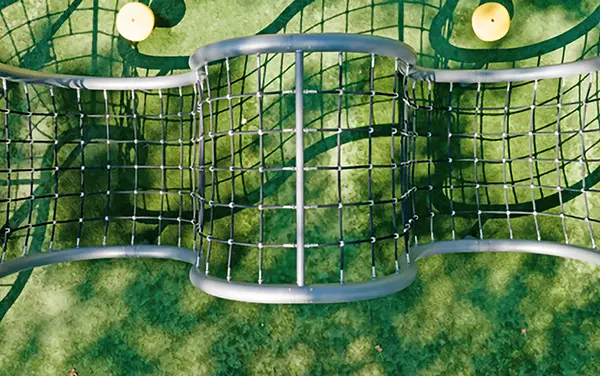
Overhead view of a curved net tunnel bridge, available from Bliss Products and Services.

Ref No. 02

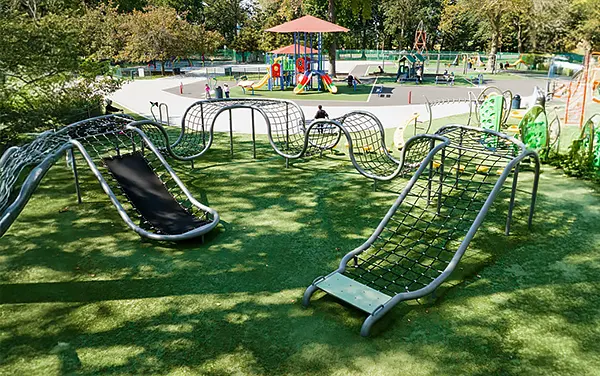
Contoured net climbers on a playground slope, available from Bliss Products and Services.

Ref No. 03

Child climbing a blue cable net on a playground structure, available from Bliss Products and Services.

Ref No. 04

Girl navigating a cargo net play element, available from Bliss Products and Services.

Ref No. 05

Aerial view of a community playground with a pyramid rope climber, available from Bliss Products and Services.

Ref No. 06

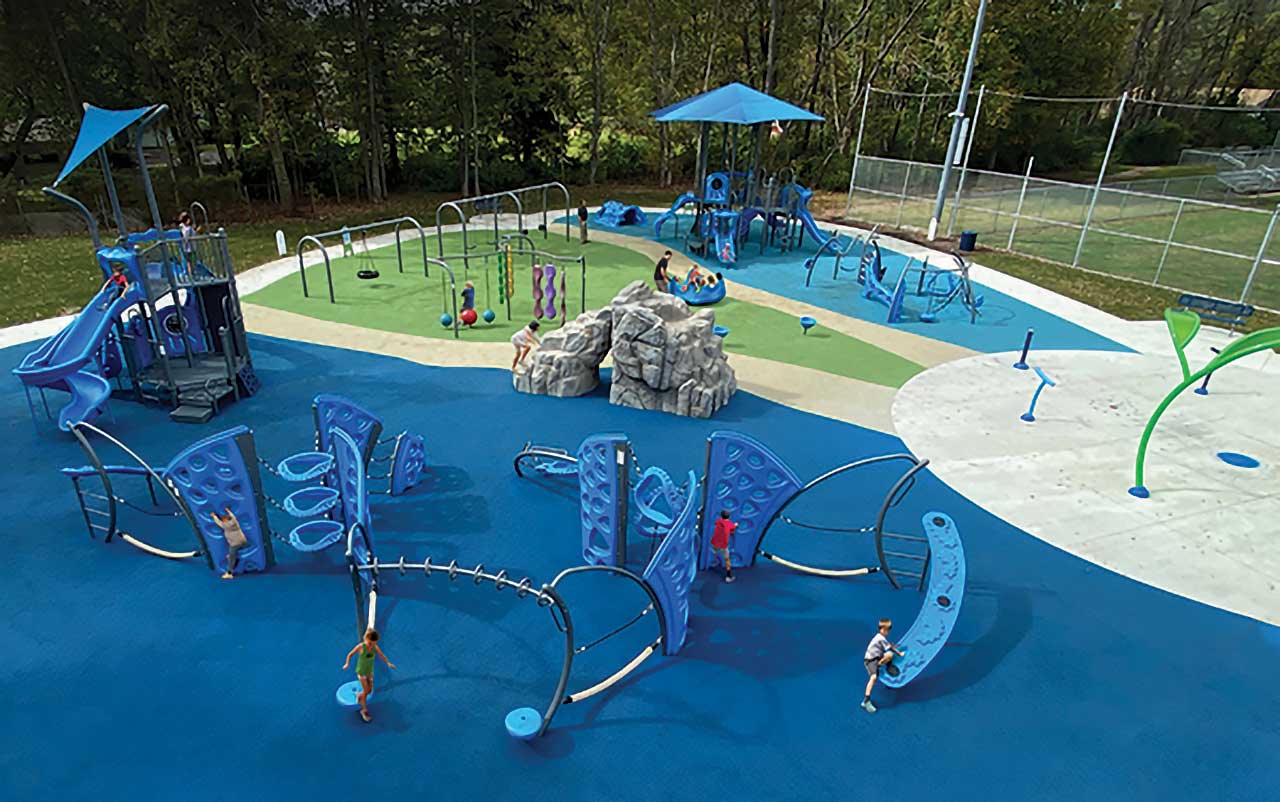
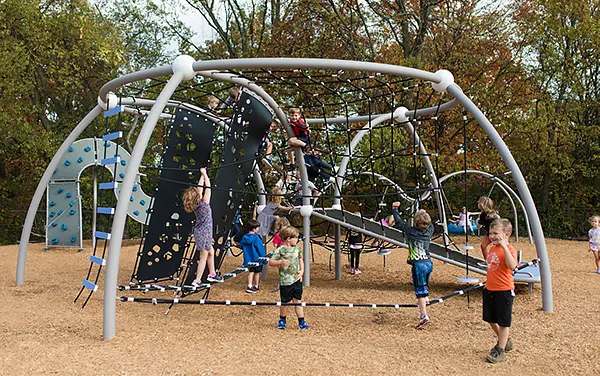
Children climbing on arched perforated climbing panels at a playground.

Ref No. 07

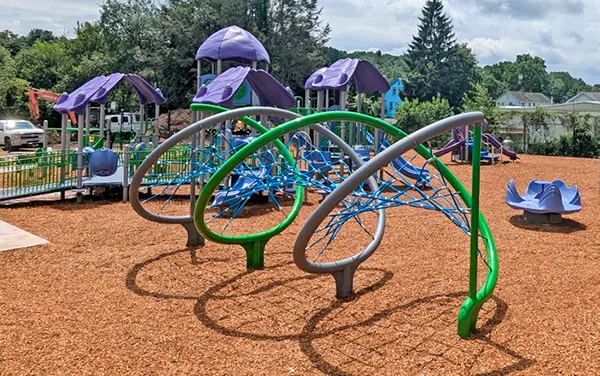
Arched cable net climbers at an accessible playground, available from Bliss Products and Services.

Ref No. 08

Children playing on a freestanding climber and spinner set.

Ref No. 09

Kids playing on a perforated deck inside a pyramid rope structure, available from Bliss Products and Services.

Ref No. 10

Aerial view of a school playground with slides and climbing activities.

Ref No. 11

Kids climbing on vertical post elements for upper-body and grip development, available from Bliss Products and Services.

Ref No. 12

Kids playing on a perforated deck inside a pyramid rope structure, available from Bliss Products and Services.

Ref No. 13

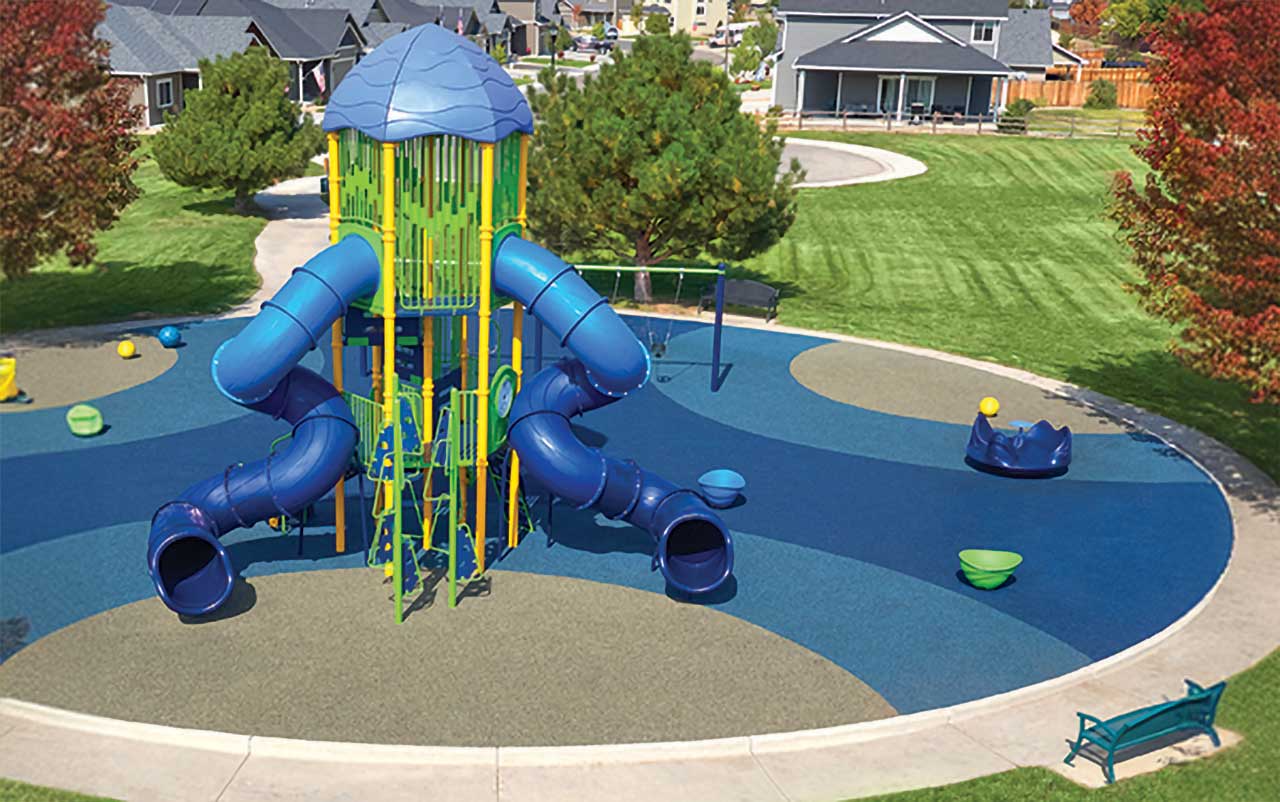
Neighborhood playground with blue shade canopy and green double slide.

Ref No. 14

Tall playground tower with multiple spiral tube slides on poured-in-place surfacing.

Ref No. 15

Cone net climber beside a modular playground with slides, available from Bliss Products and Services.

Ref No. 16

Low rope combination play structure with slide on unitary surfacing, available from Bliss Products and Services.

Ref No. 17

Children climbing cable net panels on a playground structure, available from Bliss Products and Services.

Ref No. 18

Cable net pyramid tower climber with children playing, available from Bliss Products and Services.

Ref No. 19

Cable dome net climber with molded climbing panels, available from Bliss Products and Services.

Ref No. 20

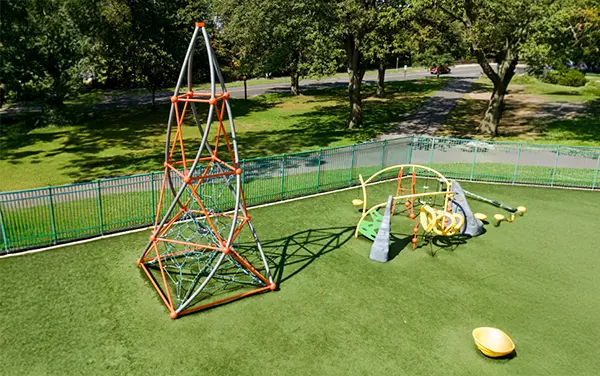
Cable net pyramid tower climber on synthetic turf, available from Bliss Products and Services.

Ref No. 21

Project highlights:  The best accessible layouts do not rely on one elevated route. Build a clear main path, add more than one route choice where possible, and make the ground-level experience feel complete.

Route planning basics: Start the route at the entry, keep it readable, and avoid tight pinch points at landings and connectors. Reserve space near transitions so users can pause, turn, and pass without blocking traffic.

Route percentage examples: Use the elevated component count to sanity-check access early. A common target is connecting 50 percent of elevated components by an accessible route, and planning ramp access for at least 25 percent when the structure has 20 or more elevated components.

ADA basics: Keep slopes, cross slopes, and clear widths consistent through the circulation line, and draw landings and transitions with enough room to function in real use, not just in concept.

Common footprints: For ages 2 to 5, a strong ground-level cluster plus a short elevated moment often works best. For ages 5 to 12, a loop layout with connectors and more than one decision point helps flow and reduces crowding.

Wear-path tips: Expect heavy traffic at entries, ramp landings, and transfer points. Reduce wear by avoiding narrow funnels, keeping surfacing transitions flush, and offering a second route choice or nearby alternative feature.

Simple checklist:

  • Clear entry route with turning space
  • Ground-level variety included, not an afterthought
  • Ramps and transfers placed outside fall zones
  • No tight pinch points at bridges and landings
  • More than one route choice to reduce congestion
  • Surfacing assumptions aligned with the route
Bliss Products and Services supports accessible play planning for schools, parks, and community spaces. These examples help teams compare ramped and transfer approaches, confirm layout requirements, and package drawings, quantities, and specifications in a format that supports review and purchasing.