Play for Everyone

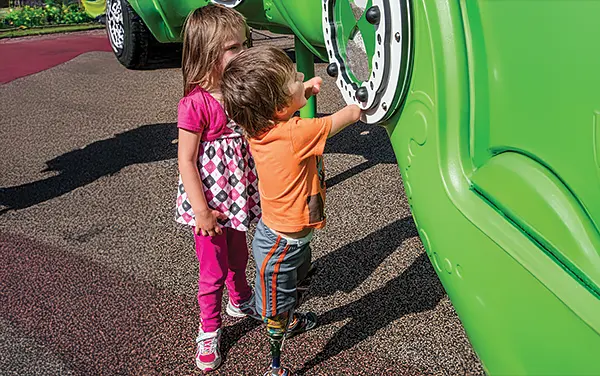
Children engaging with an interactive sensory panel on a themed play structure, available from Bliss Products and Services.

Inclusive Playground Concept

Play for Everyone on Playgrounds

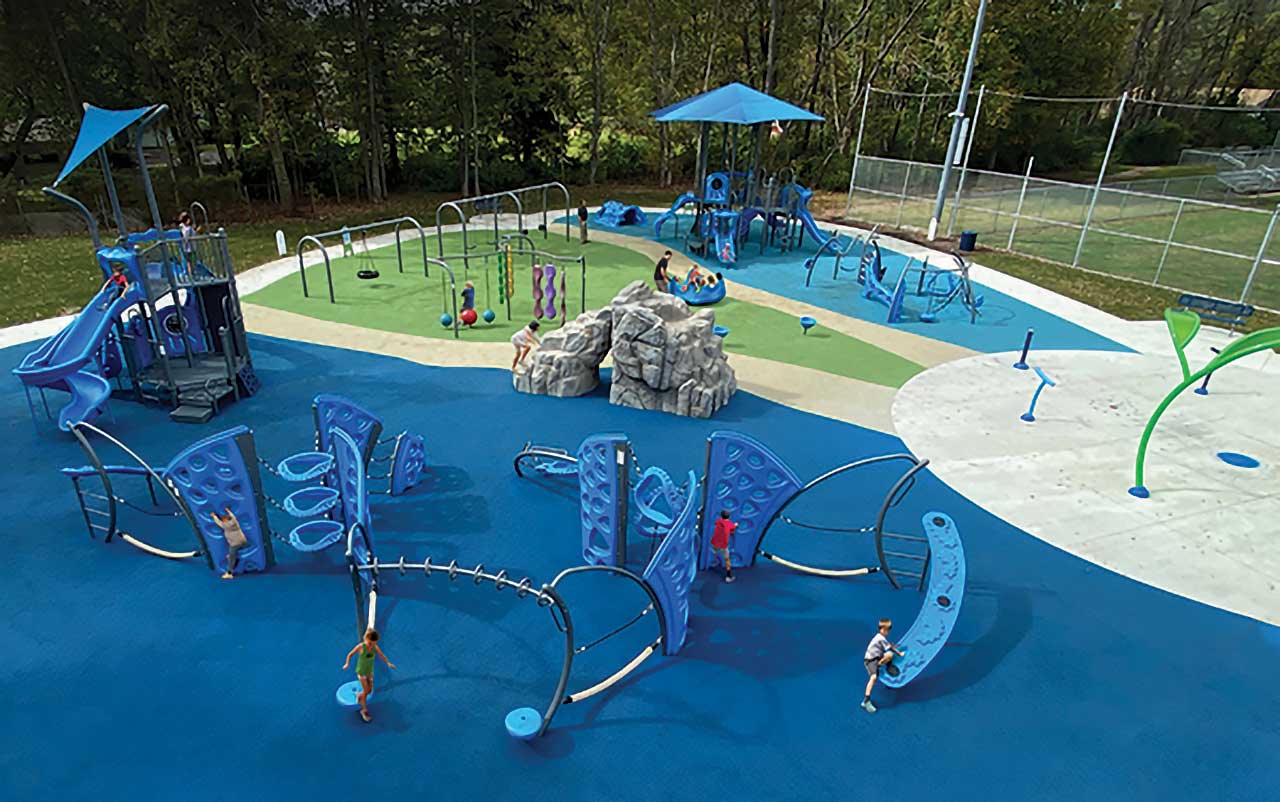
Inclusive play helps more people participate comfortably, including children with mobility, sensory, or balance needs, and caregivers who want clearer routes and better visibility. A well-planned inclusive layout keeps play choices close together without forcing everyone into one single feature.

This hub highlights the most common inclusive building blocks used in playground planning: inclusive combo structures, transfer points, ground-level activities, sensory and music elements, and seating options that support different users. The goal is to keep access routes clear, reach ranges practical, and choices easy to understand on a site plan.

Start with a continuous access route that reaches the main play choices. Place a ground-level play cluster near the entry, add at least one clear transfer point, and include a quiet sensory zone slightly off the main traffic path.
Kids playing on a perforated deck inside a pyramid rope structure, available from Bliss Products and Services.

Ref No. 01

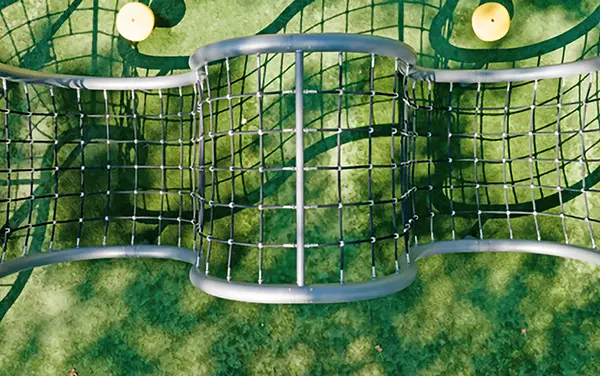
Overhead view of a curved net tunnel bridge, available from Bliss Products and Services.

Ref No. 02

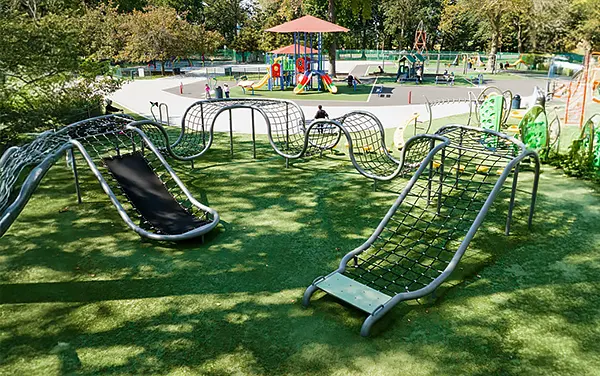
Contoured net climbers on a playground slope, available from Bliss Products and Services.

Ref No. 03

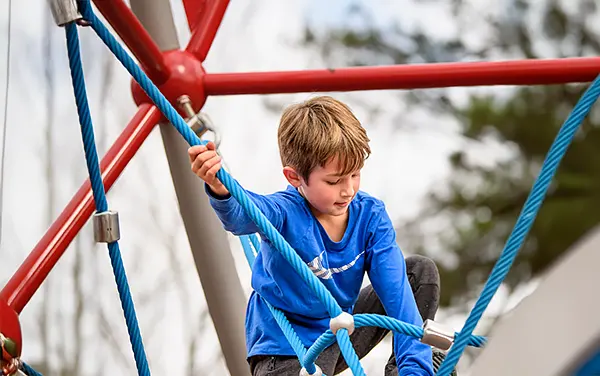
Child climbing a blue cable net on a playground structure, available from Bliss Products and Services.

Ref No. 04

Girl navigating a cargo net play element, available from Bliss Products and Services.

Ref No. 05

Aerial view of a community playground with a pyramid rope climber, available from Bliss Products and Services.

Ref No. 06

Children climbing on arched perforated climbing panels at a playground.

Ref No. 07

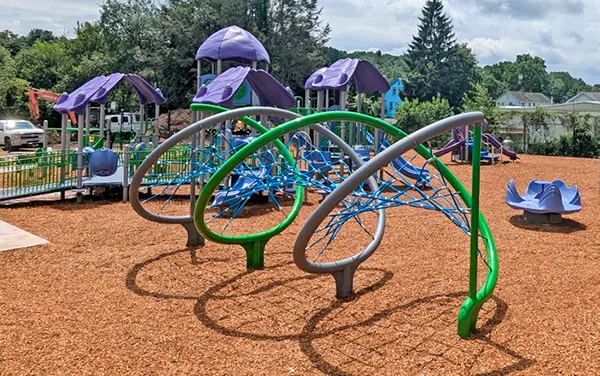
Arched cable net climbers at an accessible playground, available from Bliss Products and Services.

Ref No. 08

Children playing on a freestanding climber and spinner set.

Ref No. 09

Kids playing on a perforated deck inside a pyramid rope structure, available from Bliss Products and Services.

Ref No. 10

Aerial view of a school playground with slides and climbing activities.

Ref No. 11

Kids climbing on vertical post elements for upper-body and grip development, available from Bliss Products and Services.

Ref No. 12

Kids playing on a perforated deck inside a pyramid rope structure, available from Bliss Products and Services.

Ref No. 13

Neighborhood playground with blue shade canopy and green double slide.

Ref No. 14

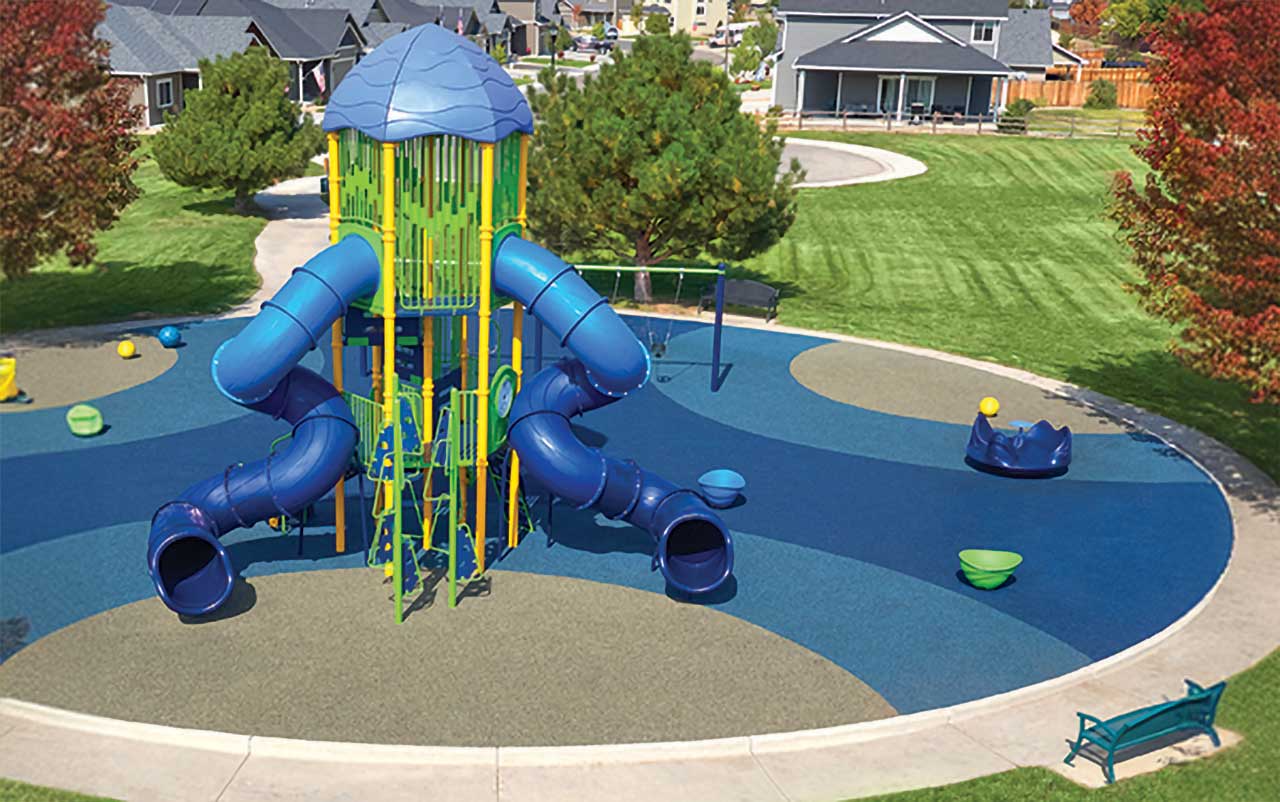
Tall playground tower with multiple spiral tube slides on poured-in-place surfacing.

Ref No. 15

Cone net climber beside a modular playground with slides, available from Bliss Products and Services.

Ref No. 16

Low rope combination play structure with slide on unitary surfacing, available from Bliss Products and Services.

Ref No. 17

Children climbing cable net panels on a playground structure, available from Bliss Products and Services.

Ref No. 18

Cable net pyramid tower climber with children playing, available from Bliss Products and Services.

Ref No. 19

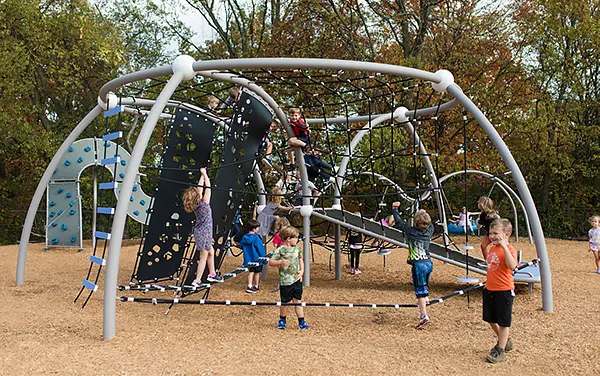
Cable dome net climber with molded climbing panels, available from Bliss Products and Services.

Ref No. 20

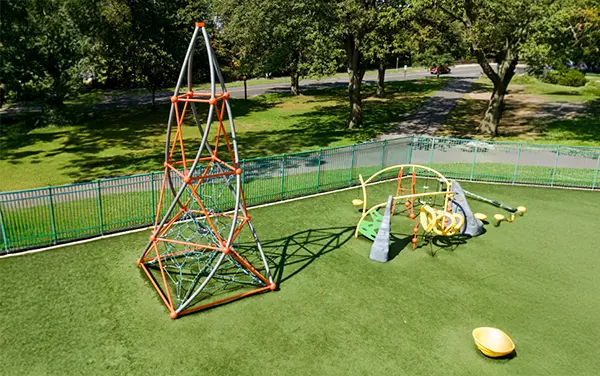
Cable net pyramid tower climber on synthetic turf, available from Bliss Products and Services.

Ref No. 21

Project highlights:  Inclusive play works best when access, variety, and comfort are planned together. Provide more than one way to participate, with options at ground level and on the structure. Keep routes clear so users can approach, play, and exit without crossing high-energy zones.

Route planning basics: Build a continuous access route from the entry to the primary play choices. Keep turning areas open, avoid pinch points, and maintain smooth transitions where surfacing meets borders, ramps, and play edges.

Reach ranges and participation: Place interactive panels and sensory activities where they can be reached from different positions. Mix standing, seated, and ground-level choices so participation is not limited to one height.

Seat options: Include a mix of supportive seating, inclusive swings where appropriate, and nearby caregiver seating that faces the play area. Place at least one quiet bench slightly off the main flow for breaks.

Simple checklist:

  • Continuous access route to key play choices
  • Ground-level activities near the entry
  • At least one clear transfer point shown on plan
  • Sensory or music elements included in the main cluster
  • Caregiver seating and a quiet break spot nearby
  • Clear sightlines and clean circulation paths
Bliss Products and Services supports inclusive playground planning and procurement for schools, parks, and community spaces. These examples help teams compare inclusive elements, align layouts with practical access needs, and package drawings, quantities, and specifications in a format that supports review, budgeting, and purchasing.