
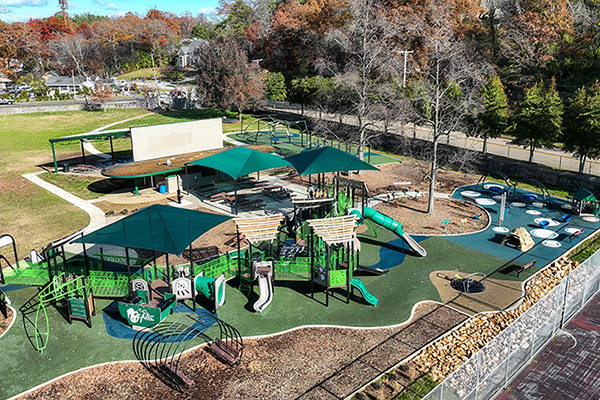
On July 26, 1990, the Americans with Disabilities Act was signed into law. Thirty-six years later, ADA accessibility continues to shape parks, playgrounds and recreation facilities across the United States. The ADA established important protections for people with disabilities and changed the way accessibility is considered in public facilities and services.
For parks, accessibility involves much more than reaching a piece of playground equipment. A visit might begin in the parking area, continue along a pathway to the playground, include lunch under a shelter, a stop at a drinking fountain or restroom, and time spent watching children play. Each part of that visit matters. A park works best when people can move between its different spaces and amenities rather than encountering barriers along the way.
Accessibility Starts Before the Playground
A well-designed playground cannot provide a fully useful experience if visitors have difficulty getting to it. Parking, pathways, entrances and connections between different areas of a park all influence how the site works. Under the ADA Standards, accessible routes connect accessible buildings, facilities, elements and spaces on the same site. That makes accessibility a whole-site consideration, rather than something that begins only when someone reaches the play equipment.
Lake Lisa Park in Port Richey, Florida, provides a useful example of that wider approach. The park includes parking, a picnic shelter, recreation areas and a 3,900-foot asphalt trail. Project engineers also documented an ADA-compliant sidewalk connecting the parking area with the picnic shelter area. That sidewalk is part of the wider park infrastructure, while the inclusive playground supplied by Bliss Products and Services later became another part of the same recreation environment.
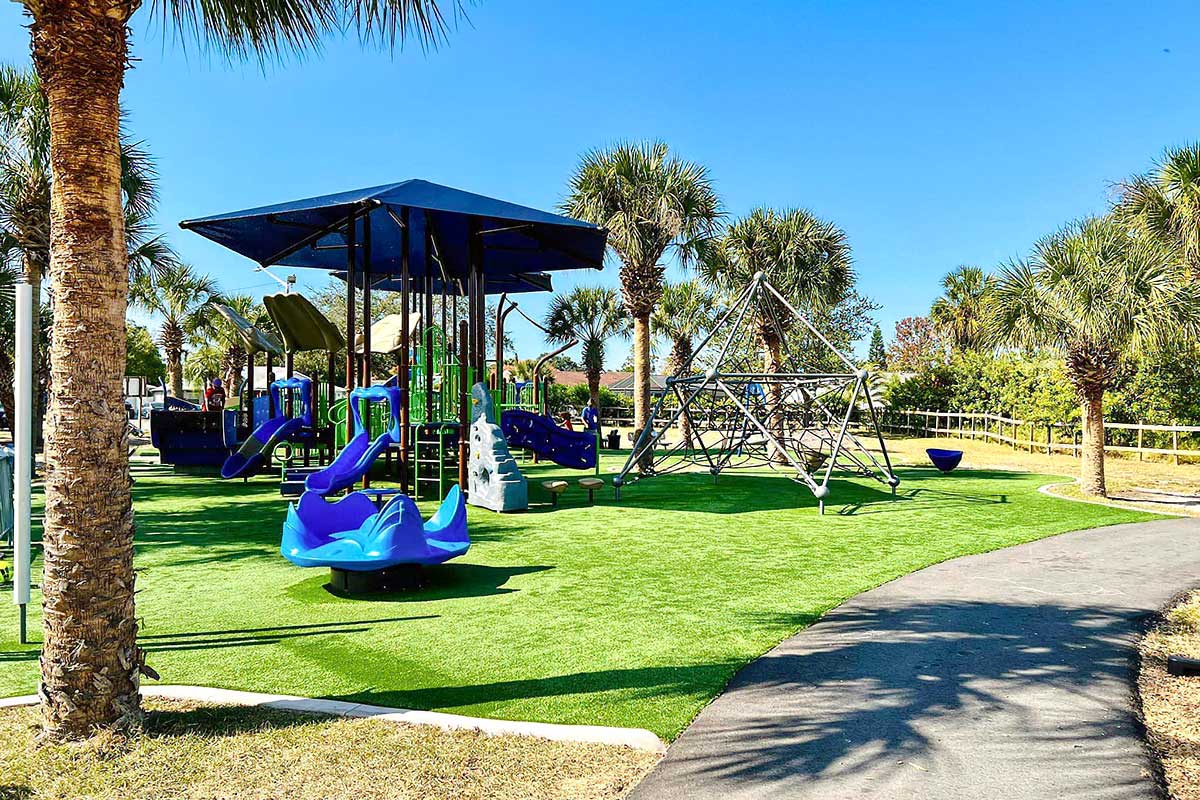
In the project photography, a paved path can be seen running alongside the playground and through the park setting. The playground, pathway, shelter and other amenities may have been developed through different projects, but visitors experience them as one park. Someone arriving for an afternoon at Lake Lisa is unlikely to think about which improvement was completed first or who designed each individual element. What matters to the visitor is being able to move between the places they came to use.
Ramped Access Can Open Up More of the Playground
Accessible playground design does not have to stop at ground level. The ADA Standards address both ground-level and elevated play, with at least half of elevated play components required to be located on an accessible route. In play areas with 20 or more elevated components, ramps must connect at least 25 percent of those components. Where multiple structures serve the same age group within one play area, those elevated components are counted together.
Transfer systems provide another way to reach elevated activities, but ramps can allow children using wheelchairs or other mobility devices to travel farther into a play structure while remaining in their mobility equipment. That can open access to elevated pathways, activity panels and other experiences above ground level. It can also make the route through the structure part of the play itself. Instead of concentrating accessible opportunities around the edge of a playground, ramped access can help bring more of the structure within reach.
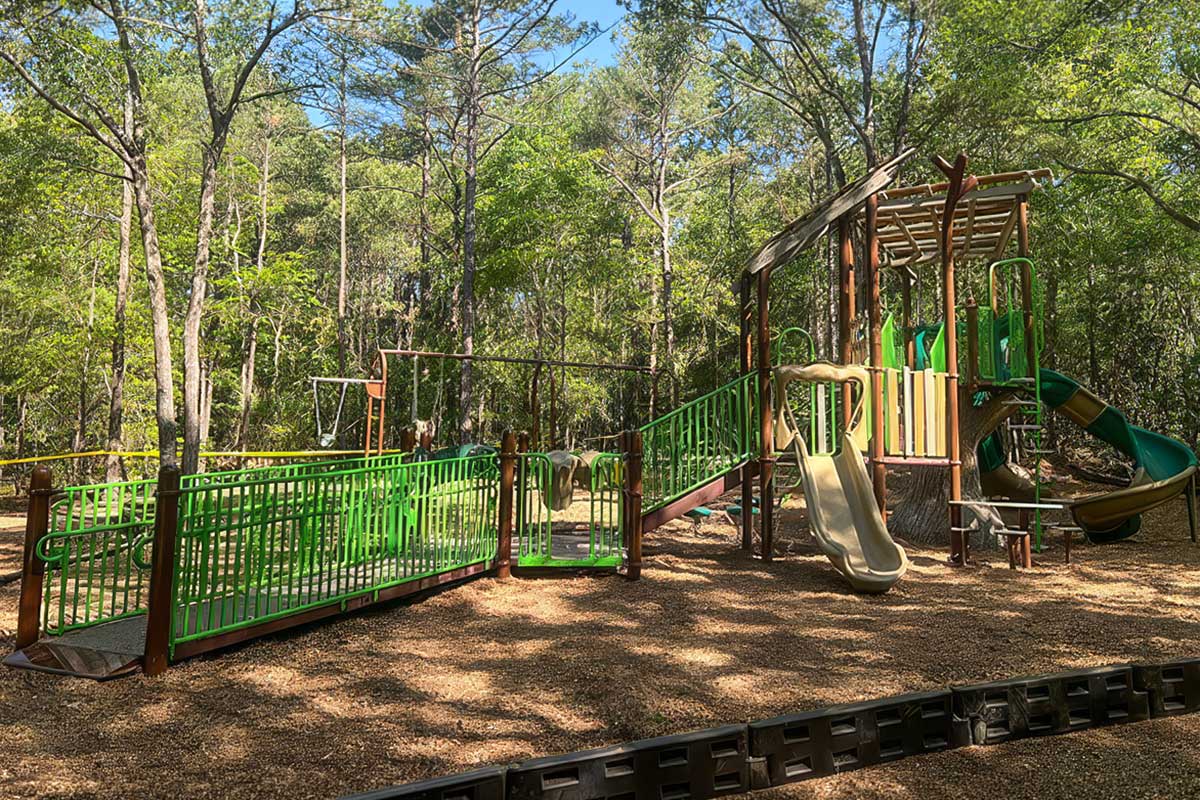
At Anderson Creek County Park in Harnett County, North Carolina, ramped access is incorporated directly into the new woodland-themed playground. The ramp connects into the main structure alongside elevated pathways, slides and climbing features. Natural colors, tree-inspired details and elevated play areas help the equipment fit into the wooded setting. Because the ramp uses the same visual language as the rest of the equipment, it appears as an integral part of the playground rather than a separate addition.
The playground opened in April 2026 and forms part of Anderson Creek County Park, a site covering more than 1,000 acres. The wider park also includes trails, parking, a picnic pavilion and restrooms, with additional recreation development planned in phases. That larger setting reinforces the same point seen at Lake Lisa: the playground is one destination within a much broader recreation site. Visitors still need to arrive, move through the park and use the other amenities around it.
Getting There Is Only Part of Inclusive Play
Physical access is essential, but reaching the playground is only the beginning. Once children enter the play environment, the next question is what they can actually do there. Accessible playground design and inclusive playground planning can provide different ways to move, communicate and interact, together with opportunities to explore sound, texture, movement and social play. Accessibility and inclusive design overlap, but inclusive playground planning can consider a much wider range of experiences once a child is inside the playground.
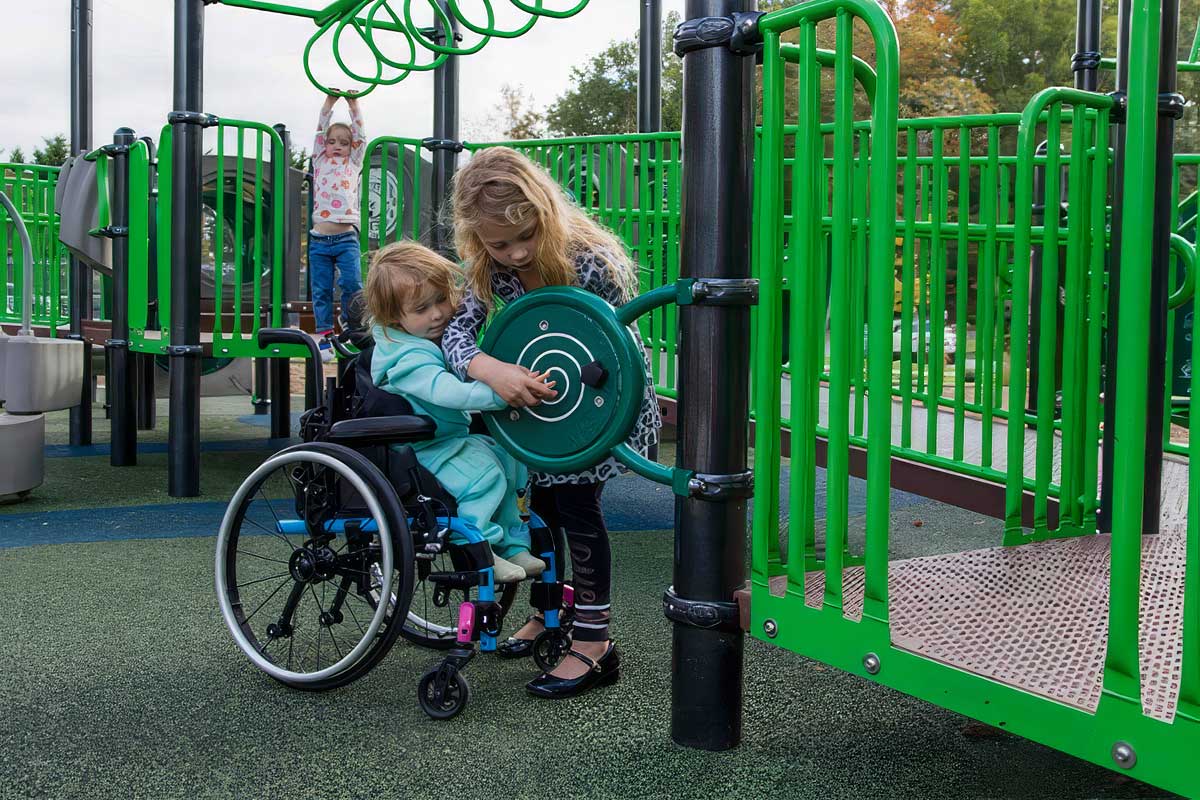
Riverview Park in Chattanooga, Tennessee, provides a strong example of this approach. The playground was developed through a partnership involving Hope Included, Chattanooga Parks and Outdoors, Play & Park Structures and Bliss Products and Services. Hope Included was founded by Nicolle McCoy in memory of her daughter Hope, and the project grew from a community effort focused on creating more inclusive opportunities for play. That background gives Riverview a very different story from a conventional playground replacement or municipal equipment upgrade.
The playground includes ramps for mobility devices, sensory-friendly music and a range of different play experiences. Bliss Products and Services supplied slides, climbers, swings and sensory play features and also contributed surfacing, signage and furnishings. One of the project photographs captures the purpose particularly well, showing a child using a wheelchair interacting with a sensory play panel within the main playground environment. The significance is not simply that the child can enter the playground; the activity is positioned as part of the same play environment being used by other children.
Going Beyond the Minimum
Some of the most useful inclusive playground features are not specifically required by the ADA. Accessibility standards establish an important foundation, but playground planners can also consider communication, sensory experiences, different types of movement and the ways children interact with one another. Equipment can offer different levels of physical challenge, activities that can be used from different positions and opportunities for children who communicate or process sensory information differently. Those choices broaden the play experience without needing to describe every inclusive feature as an ADA requirement.
Walker Rocks Park in Walker County, Georgia, demonstrates that approach particularly well because the county has published detailed information about the equipment provided. Its original playground included 25 named components, among them a sensory game with adaptive switch capability, a hand pedaler, musical activities and other interactive play features. A later expansion added an inclusive carousel, a sensory station, sensory totems and a communication board. The county also describes a climbing feature designed to provide children with limited use of their legs another way to participate in climbing activities.
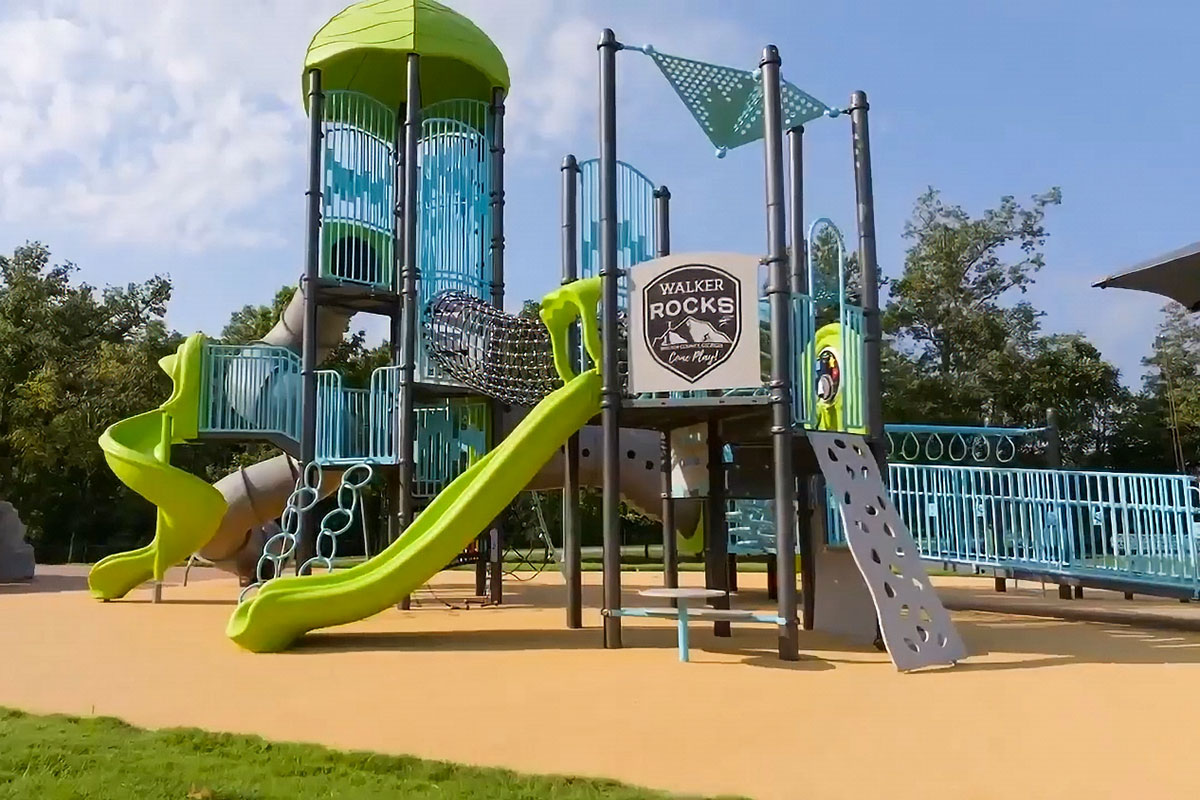
Walker Rocks has also been designated a National Demonstration Site for inclusive play by PlayCore’s Center for Outreach, Research and Education. The designation is not a government accessibility certification, but the project is useful because of the variety of choices built into the playground. Communication boards, adaptive controls, sensory activities, music and inclusive rotating equipment address different ways children communicate, move and engage with play. Riverview shows participation and integration in practice, while Walker Rocks demonstrates how individual equipment choices can expand the number of ways children can participate.
Accessible Surfacing Needs Attention After Opening Day
Surfacing is an important part of playground accessibility because it has more than one job to do. Along accessible routes and in the clear spaces beside equipment, the surface needs to remain firm and stable enough for someone using a wheelchair or another mobility device to travel across it. Where the same surface is within the fall area around playground equipment, it also needs to provide the appropriate impact protection. Both functions need to work together throughout the areas where children move and play.
Selecting and installing a surface is therefore only the beginning. Loose-fill materials can shift as children run, jump and land, while weather and drainage can change the condition of the surface over time. Areas beneath swings, around slide exits and at transitions between different surfaces often receive particularly heavy use. A route that worked well when the playground opened can become more difficult to use if material moves away, edges become uneven or damaged areas are left unattended.
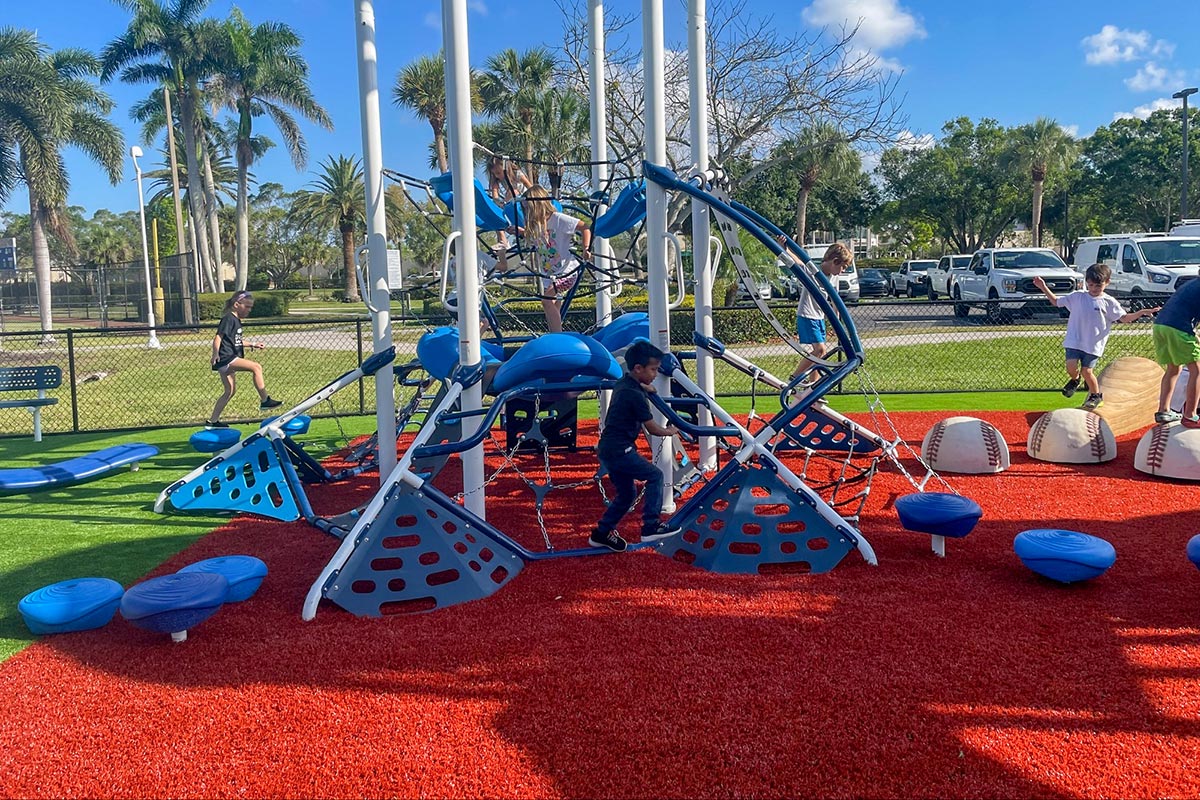
Regular inspection and maintenance are part of keeping those routes usable rather than simply keeping the playground looking tidy. Loose material may need to be redistributed or replenished, transitions should be checked and worn areas need attention before they become larger problems. For municipalities, schools and other playground owners, long-term maintenance should be considered when surfacing decisions are made. Accessibility is easier to preserve when maintenance requirements are understood from the start.
Parks Need Places to Stop, Sit and Gather
A visit to a park can last much longer than a few minutes on a playground. Parents may spend an hour watching children play, grandparents may need somewhere comfortable to sit, and families may bring lunch or meet friends under a shelter. Other visitors may need a rest break as they move around a larger recreation site. Site amenities such as benches, picnic tables, shelters and shaded seating therefore become part of how people actually use the park.
Not every feature that improves usability is specifically required by the ADA. Ordinary outdoor park benches are not covered by a general ADA requirement, and shade itself is not generally required simply because a park is being developed. That does not make either feature unimportant. Providing room beside seating for a wheelchair or another mobility device, positioning benches at useful points along longer routes, choosing seating with supportive backs and arms, and providing shade where people are likely to spend time can all make a park more comfortable for a wider range of visitors.
Picnic and dining areas are different because dining surfaces do have specific accessibility requirements. Where dining surfaces are provided, the ADA Standards require at least 5 percent of the seating and standing spaces to meet the applicable accessibility requirements. Those accessible positions also need to be dispersed rather than grouped into one isolated part of the dining area. In practical terms, someone using a wheelchair should be able to sit with family or friends rather than finding that the only usable position is separated from the rest of the group.
The area around a table also matters. An appropriate table provides limited benefit if the route to it is difficult to use or there is insufficient room to approach and position a mobility device comfortably. Thinking about the table, surrounding space, route, shelter and nearby seating together produces a more useful gathering area. These are the kinds of details that become much more obvious when a park is considered from the visitor’s point of view.
Don’t Forget the Rest of the Visit
Playgrounds tend to receive the most attention because they are colorful, active and easy to photograph. Restrooms, drinking fountains, picnic shelters, pathways and places to sit are less exciting visually, but they can determine whether someone is able to stay at a park for an extended visit. A family might spend several hours at a recreation site, particularly when playgrounds, splash pads, picnic areas or sports facilities are located together. Supporting amenities become increasingly important the longer people remain on site.
When toilet facilities are provided, ADA accessibility requirements apply to those facilities. Drinking fountains are also addressed by the ADA Standards, including provisions serving people using wheelchairs and people who use fountains from a standing position. Providing the amenity itself is only part of the equation because visitors still need to be able to reach it. A restroom or drinking fountain can be conveniently located on a site plan and still be difficult to use if the route between it and the recreation area creates barriers.
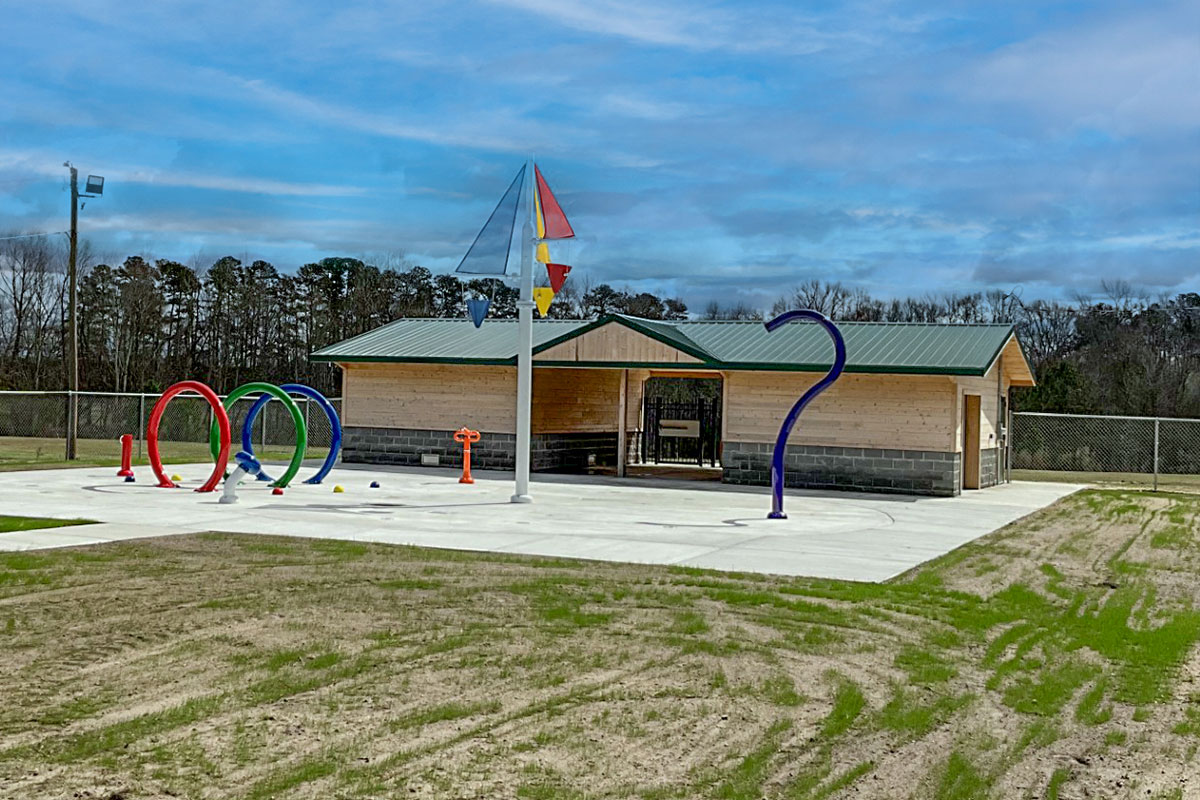
Clark Park in Tarboro, North Carolina, illustrates this wider view of a recreation project. The Town of Tarboro replaced the former Clark Park pool with a new splash pad project that also included a pavilion with picnic tables and a restroom building. A walkway connects the splash area with the pavilion, bringing recreation, seating and supporting facilities together within the same site. Bliss Products and Services supplied elements of the project.
The splash pad may be the feature that first attracts families, but it is only one part of their visit. People may spend time under the pavilion, eat at the picnic tables, use the restroom and move back and forth between different areas of the site. Each of those activities depends on the wider park layout working properly. Supporting amenities may receive less attention than the recreation equipment, but they can have just as much influence on whether visitors are able to use the site comfortably.
Accessibility Is About the Complete Park Experience
A visitor does not experience a park as a checklist of individual specifications. They experience the parking area, the path into the park, the playground, the picnic table, the shade, the restroom, the drinking fountain and the routes between all of them. Someone may be able to use one destination perfectly well but still encounter difficulty reaching the next. Looking at the complete visit provides a more practical way to think about accessibility than considering each amenity in isolation.
Thirty-six years after the Americans with Disabilities Act became law, accessibility remains an essential part of planning public recreation spaces. For playgrounds, accessible playground design can include accessible routes, ramps, ground-level activities and appropriate surfacing. Inclusive planning can then broaden the experience further through sensory play, communication tools and equipment that gives children different ways to move, interact and participate. Those decisions help translate physical access into a more useful recreation experience.
The same thinking extends across the rest of the park. Paths need to connect the places people want to reach, seating and picnic areas need to work for the people using them, and restrooms and drinking fountains need to be reachable from the recreation areas they serve. Shade and places to rest can make longer visits considerably more comfortable even where those features are not specifically mandated by the ADA. Parks are made up of individual pieces, but visitors experience those pieces together. Accessibility does not begin at the playground entrance, and it does not end at the play structure.
Planning a Park or Recreation Project?
Bliss Products and Services works with municipalities, schools, parks and recreation departments, HOAs and other organizations on playgrounds, outdoor recreation equipment, shade and shelters, site furnishings and related park amenities. Projects can range from an individual playground or site improvement to larger recreation spaces that bring multiple amenities together. Considering those elements as part of the complete visitor experience can help produce recreation spaces that are easier and more practical for people to use.
Bliss Products and Services can help with planning and product selection for parks, playgrounds and other outdoor recreation projects. Whether a project involves play equipment, site furnishings, shade, shelters or a combination of amenities, the starting point is understanding how the space will be used.
Contact Bliss Products and Services
or
find your local sales representative
to discuss your next park, playground or recreation project.
Recent Comments